
Macbeth Act 1: A Comprehensive Study Guide
Delve into Shakespeare’s dark tragedy, exploring themes of ambition, fate, and the supernatural; puzzles depict iconic scenes, while history unveils a ruthless king’s tale.
Shakespeare’s Macbeth, penned around 1606, dramatically reflects the anxieties and beliefs of Elizabethan England, a period fascinated by witchcraft and the divine right of kings; The play premiered during the reign of James I, who had a keen interest in demonology – a fact subtly woven into the narrative. Elizabethan theatres, like the Globe, were open-air structures, fostering a direct connection between performers and a diverse audience.
Productions relied heavily on evocative language and staging, as elaborate sets were limited. Costumes, however, were often opulent, signifying a character’s status. The acting troupes, composed entirely of men, skillfully employed soliloquies and dramatic irony to engage the crowd. Understanding this theatrical context is crucial; it illuminates how Shakespeare intended his play to be experienced, enhancing our appreciation of its power and artistry. The era’s superstitions, notably surrounding the play itself, further contribute to its enduring mystique.
Historical Context: The Real Macbeth
Macbeth, historically, was a real Scottish king (1040-1057), though Shakespeare’s portrayal dramatically diverges from documented facts. The actual Macbeth ascended to the throne legitimately, not through regicide, and ruled for seventeen years, presiding over a relatively prosperous and peaceful reign. He was, however, a ruthless and ambitious figure, involved in conflicts and power struggles.
Historical accounts depict Macbeth as a strong leader who restored order to Scotland after a period of instability. His wife, Gruoch, was not the manipulative character presented by Shakespeare, but a respected noblewoman. Shakespeare drew upon Holinshed’s Chronicles, a popular historical source, but embellished the narrative for dramatic effect, focusing on the darker aspects of Macbeth’s character and incorporating elements of folklore and superstition. This creative license transformed a complex historical figure into a tragic villain.
Shakespeare’s Sources for Macbeth
Shakespeare primarily relied on Raphael Holinshed’s Chronicles of Scotland (1577) as his main source for the story of Macbeth. Holinshed’s account, though itself based on earlier chronicles and folklore, provided the foundational narrative of Macbeth’s rise to power, his encounter with the witches, and his eventual downfall. However, Shakespeare wasn’t a slavish adapter; he significantly altered and expanded upon Holinshed’s material.
Additionally, Shakespeare drew inspiration from a pamphlet detailing the travels of King James I (then James VI of Scotland) to Denmark in 1589, which described encounters with witchcraft. This likely fueled the play’s intense focus on the supernatural. He also incorporated elements of demonology prevalent during the Elizabethan era, reflecting contemporary anxieties about witchcraft and the occult. Shakespeare masterfully blended historical source material with dramatic invention, creating a compelling and psychologically complex tragedy.
The Curse of Macbeth: Theatre Superstitions
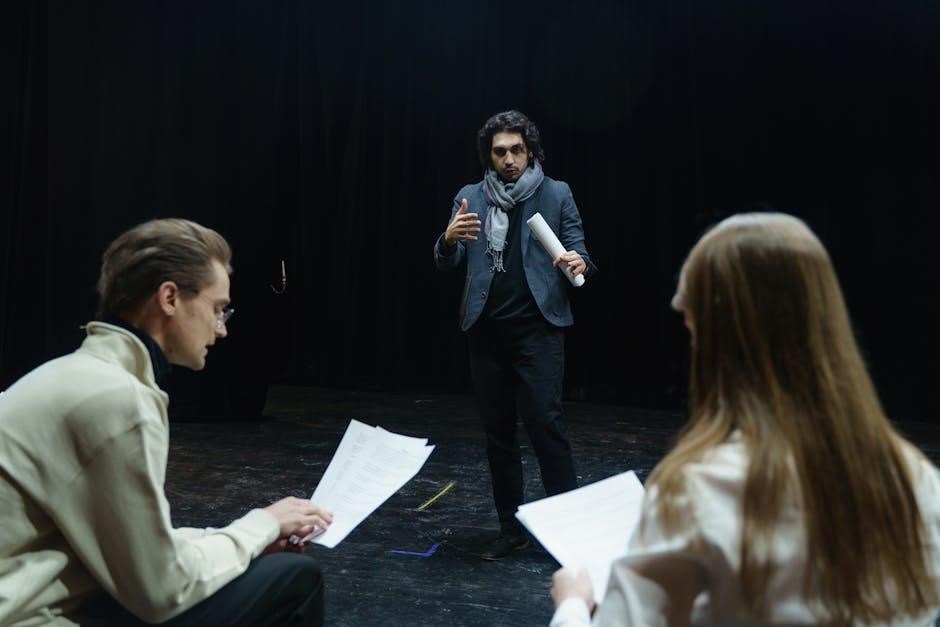
“Macbeth” is famously known as “The Scottish Play” within theatrical circles, a deliberate avoidance of uttering its actual name due to a long-held belief in a curse. This superstition originated from a series of unfortunate incidents during the play’s early productions, including accidents, illnesses, and even deaths. Actors often believe saying “Macbeth” inside a theatre will bring bad luck, potentially jeopardizing the entire production.
Various rituals have developed to counteract the curse. One common practice involves leaving the theatre immediately after a performance and circling the building. Another involves reciting specific lines or performing a cleansing ritual. These traditions, while seemingly irrational, demonstrate the enduring power of superstition within the acting community, highlighting a deep-seated respect – and fear – surrounding this iconic Shakespearean tragedy.

Scene-by-Scene Analysis of Act 1
Explore each scene’s unfolding drama, from the witches’ ominous prophecies to Macbeth’s internal struggles and Lady Macbeth’s relentless drive for power.
Scene 1: The Witches and the Atmosphere of Evil
The play dramatically opens amidst a tempest, immediately establishing a chilling and unsettling atmosphere. Three witches convene, uttering cryptic pronouncements – “Fair is foul, and foul is fair” – a paradoxical statement that permeates the entire play, blurring moral boundaries and foreshadowing the chaos to come. This scene doesn’t present a clear narrative; instead, it functions as a prologue, introducing the supernatural element and hinting at the disruption of the natural order.
Shakespeare masterfully employs pathetic fallacy, with the storm mirroring the inner turmoil and impending evil. The witches’ ambiguous language and unsettling presence create a sense of dread and anticipation. Their intention isn’t to reveal a straightforward prophecy, but to sow seeds of doubt and temptation. This initial encounter establishes the witches as agents of chaos, manipulating fate and influencing the actions of mortals, setting a dark and ominous tone for the tragedy that unfolds.
Scene 2: Introducing Macbeth and Banquo – The Captain’s Report
This scene shifts the focus to the battlefield, where King Duncan receives news of a valiant victory against rebellious forces. A Captain delivers a detailed report, vividly describing Macbeth and Banquo’s extraordinary bravery and skill in combat. Macbeth is presented as a heroic and ruthless warrior, single-handedly defeating the enemy champion, Macdonwald, and later, the Norwegian forces.
The Captain’s enthusiastic praise establishes Macbeth’s reputation as a loyal and courageous nobleman, a stark contrast to the ambition that will later consume him. Banquo is also lauded for his valor, though presented as slightly less dominant than Macbeth. This initial portrayal is crucial, as it highlights Macbeth’s existing qualities before the witches’ prophecies begin to influence him. Duncan acknowledges their service, rewarding Macbeth with the title of Thane of Cawdor, unknowingly setting the stage for further manipulation and tragedy.
Scene 3: The Witches’ Prophecies – Initial Reactions
The infamous scene with the three witches introduces an atmosphere of darkness and foreboding. They deliver cryptic prophecies to Macbeth and Banquo, predicting Macbeth will become Thane of Cawdor and eventually King of Scotland, while Banquo’s descendants will be kings. These pronouncements immediately spark Macbeth’s ambition, causing internal turmoil as he contemplates the possibility of achieving such high status.
Banquo reacts with skepticism and caution, recognizing the potential for evil in the witches’ pronouncements. He warns Macbeth against trusting such “instruments of darkness.” Macbeth, however, is captivated by the prophecies, though unsettled by their implications. The scene establishes the theme of fate versus free will, questioning whether Macbeth’s destiny is predetermined or if he has the agency to choose his own path. The witches vanish, leaving both men grappling with the unsettling predictions.
Scene 4: King Duncan’s Recognition of Macbeth’s Valor
This scene dramatically shifts the focus to King Duncan, who learns of Macbeth and Banquo’s bravery from a Captain reporting on their battlefield successes against rebellious forces. The Captain vividly describes Macbeth’s ruthless efficiency and valor in combat, portraying him as a heroic and loyal subject. Duncan expresses immense gratitude and admiration for both warriors, particularly Macbeth, acknowledging his crucial role in restoring order to the kingdom.
He publicly announces his intention to reward Macbeth with the title of Thane of Cawdor, a position previously held by a traitor. This announcement fulfills the first part of the witches’ prophecy, further fueling Macbeth’s ambition and planting the seeds of his future treachery. Duncan’s trusting and generous nature is highlighted, contrasting sharply with the dark undercurrents already introduced, foreshadowing his eventual downfall. The scene establishes Duncan as a virtuous, yet naive, ruler.
Scene 5: Lady Macbeth’s Ambition and Determination
This pivotal scene unveils Lady Macbeth’s character – a woman consumed by ambition and possessing a ruthless determination to see her husband attain power. Upon reading Macbeth’s letter detailing the witches’ prophecies and Duncan’s bestowal of the Thane of Cawdor title, she immediately begins plotting to make him king.
Lady Macbeth fears Macbeth’s nature is “too full o’ the milk of human kindness” to seize the throne through forceful means. She calls upon dark spirits to “unsex” her, stripping away feminine qualities she associates with weakness and filling her with cruelty. She resolves to manipulate Macbeth, questioning his manhood and urging him to act decisively; Her soliloquy reveals a chilling ambition and willingness to sacrifice morality for power, establishing her as a driving force behind the tragedy’s unfolding events.
Scene 6: The Arrival of King Duncan at Inverness
This scene establishes a deceptive façade of hospitality as King Duncan arrives at Macbeth’s castle, Inverness. Macbeth is praised for his loyalty and service, unaware of the treacherous plans brewing within his own home. The arrival is presented as a moment of honor and trust, sharply contrasting with the dark intentions concealed beneath the surface.

Duncan’s graciousness and trust in Macbeth heighten the dramatic irony, as the audience knows of Lady Macbeth’s plot to murder him. The scene emphasizes the theme of appearance versus reality, showcasing how easily one can be deceived by outward appearances. Macbeth briefly exits to oversee preparations, leaving Duncan vulnerable and unknowingly walking into a trap. The setting of Inverness becomes symbolic of impending doom and the corruption of noble hospitality.
Scene 7: Macbeth’s Soliloquy – Internal Conflict

Macbeth’s pivotal soliloquy reveals his agonizing internal struggle with the prospect of murdering King Duncan. He grapples with his loyalty to the king, his ambition for the throne, and the moral implications of regicide. He acknowledges Duncan’s virtues – his hospitality, his trust – making the contemplated act even more heinous in Macbeth’s own mind.
He weighs the potential consequences, both earthly and spiritual, recognizing that such a deed would disrupt the natural order. This internal debate showcases the corrupting influence of ambition and the psychological toll it takes on Macbeth. Lady Macbeth’s forceful persuasion is subtly contrasted with his hesitation, highlighting their differing approaches to achieving power. The soliloquy is a crucial turning point, demonstrating Macbeth’s descent into darkness and foreshadowing his ultimate fate.
Key Characters in Act 1
Explore Macbeth’s ambition, Lady Macbeth’s manipulation, the witches’ chaos, Banquo’s honor, and Duncan’s trust—figures shaping the play’s tragic trajectory and fateful events.
Macbeth: A Noble Soldier and Emerging Ambition
Initially presented as a valiant and respected general, Macbeth earns praise for his bravery and loyalty to King Duncan, particularly highlighted in the Captain’s report in Scene 2. He is a celebrated hero, embodying noble qualities and military prowess. However, Act 1 subtly introduces the seeds of ambition within him, sparked by the witches’ prophecies.
The witches’ predictions of becoming Thane of Cawdor and eventually King ignite a hidden desire for power. This newfound ambition clashes with his inherent sense of morality and loyalty, creating internal conflict. Macbeth grapples with the implications of the prophecies, questioning whether to actively pursue the throne or allow fate to take its course.
His character arc in Act 1 is defined by this burgeoning ambition and the initial struggle to reconcile it with his honorable nature. We witness a transformation beginning, foreshadowing his descent into tyranny as the play progresses, driven by a desire for power and influenced by external forces.
Lady Macbeth: Power, Manipulation, and Gender Roles
Lady Macbeth emerges as a powerfully ambitious and manipulative character, arguably more driven than her husband at the outset. She actively seeks power and is willing to discard traditional feminine virtues to achieve it. Upon reading Macbeth’s letter detailing the witches’ prophecies, she immediately begins plotting Duncan’s murder, recognizing her husband’s character flaws – his kindness and reluctance to seize power directly.
She famously calls upon dark spirits to “unsex” her, requesting to be filled with cruelty and stripped of feminine compassion, believing these qualities hinder ambition. This reveals a rejection of societal expectations for women in Elizabethan England; Lady Macbeth expertly manipulates Macbeth, questioning his manhood and goading him into action.
Her influence is crucial in driving the plot forward, demonstrating a ruthless determination to fulfill the prophecies and secure the throne, challenging conventional gender roles of the era through her assertive and domineering personality.
The Witches: Agents of Chaos and Fate
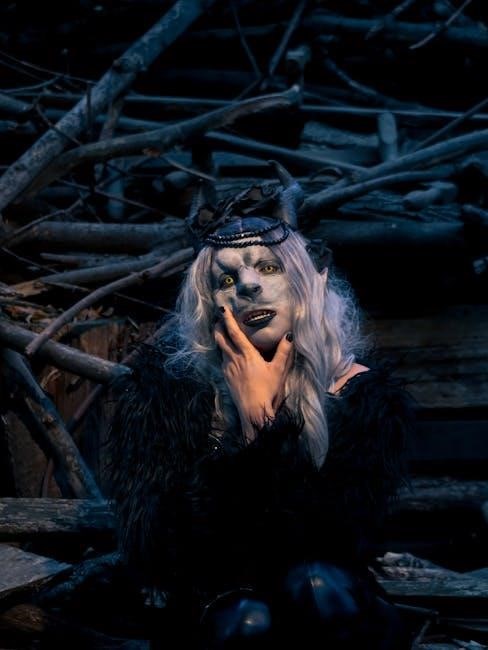
The three witches, often referred to as the Weird Sisters, are pivotal figures in Act 1, establishing the play’s unsettling atmosphere and introducing the theme of fate versus free will. Their opening scene, amidst thunder and lightning, immediately signals a world steeped in the supernatural and moral ambiguity. They deliver prophecies to Macbeth and Banquo, sparking Macbeth’s ambition and setting the tragic events in motion.
The witches’ ambiguous language and riddles create a sense of uncertainty and foreshadowing. Their pronouncements are not straightforward predictions, but rather temptations that exploit existing desires. They represent chaos and the darker aspects of human nature, embodying forces beyond rational understanding.
Superstitions surrounding Macbeth itself, with actors avoiding uttering the play’s name, reflect the enduring power and unsettling presence attributed to these enigmatic figures, solidifying their role as agents of disruption.
Banquo: Foil to Macbeth – Honor and Suspicion
Banquo serves as a crucial foil to Macbeth throughout Act 1, highlighting Macbeth’s descent into ambition and moral corruption. While both receive prophecies from the witches, Banquo reacts with cautious skepticism, demonstrating a stronger moral compass. He is a valiant general, respected by King Duncan and his peers, embodying honor and loyalty.
Unlike Macbeth, Banquo doesn’t immediately succumb to temptation. He acknowledges the witches’ power but resists dwelling on their predictions, recognizing the potential for evil influence. This contrast emphasizes Macbeth’s vulnerability to ambition. However, Banquo harbors a degree of suspicion towards the witches, sensing their connection to dark forces.

His initial reaction, coupled with his eventual fate, underscores the play’s exploration of fate and the consequences of unchecked ambition, making him a vital character for understanding Macbeth’s tragic flaw.
King Duncan: A Virtuous and Trusting Ruler
King Duncan is presented in Act 1 as the epitome of a virtuous and just ruler, embodying qualities of grace, benevolence, and unwavering trust. He is deeply respected by his subjects and particularly admires Macbeth’s bravery and loyalty, publicly recognizing his valor on the battlefield. This admiration ultimately proves to be his downfall.
Duncan’s trusting nature is a defining characteristic; he readily accepts appearances at face value, failing to perceive the dark ambition brewing within Macbeth. He embodies the ideal of kingship, representing order and stability in a chaotic world. His kindness and generosity are repeatedly emphasized, contrasting sharply with the emerging evil.
This inherent goodness makes his eventual murder all the more shocking and underscores the play’s exploration of the disruption of natural order caused by Macbeth’s actions.

Themes Explored in Act 1
Ambition’s corrupting power, fate versus free will, the supernatural’s influence, deceptive appearances, and the eternal struggle between good and evil unfold.
Ambition and its Corrupting Influence
Act 1 immediately establishes ambition as a driving, yet dangerous, force. Macbeth’s initial reaction to the witches’ prophecies isn’t one of immediate plotting, but rather a startled consideration of possibilities previously unimagined. This seed of ambition, once planted, quickly takes root, particularly fueled by Lady Macbeth’s relentless prodding and her own insatiable desire for power.
The play demonstrates how ambition, unchecked by morality, can corrupt even a noble and valiant soldier like Macbeth. His internal conflict, vividly displayed in his soliloquies, reveals the struggle between his inherent goodness and the allure of the crown. Lady Macbeth actively suppresses her feminine qualities, believing them to be impediments to ruthless ambition, showcasing the destructive lengths to which one will go to achieve power. The initial glimpses of this corruption foreshadow the tragic consequences that will unfold as Macbeth succumbs to his desires, ultimately leading to tyranny and ruin.
Fate vs. Free Will
Act 1 introduces a central tension: the extent to which Macbeth’s actions are predetermined by fate, as prophesied by the witches, or driven by his own free will. The witches’ pronouncements ignite Macbeth’s ambition, but do they cause his actions, or merely reveal a pre-existing potential? Macbeth wrestles with this question, initially resisting the idea of actively pursuing the throne through violence.
However, Lady Macbeth’s influence and his own internal desires push him towards a deliberate choice to seize power. The play subtly suggests that while the prophecies may set events in motion, it is Macbeth’s decisions – his willingness to contemplate regicide and then to commit it – that ultimately seal his fate. This interplay between external forces and individual agency raises profound questions about responsibility and the nature of destiny, leaving audiences to ponder whether Macbeth is a victim of fate or the architect of his own downfall.
The Supernatural and the Unnatural
Throughout Act 1, Shakespeare establishes a pervasive atmosphere of the supernatural, immediately immersing the audience in a world where the boundaries between the natural and the unnatural are blurred. The opening scene, featuring the three witches, sets a tone of ominous foreboding, introducing beings who defy natural laws and revel in chaos. Their prophecies, delivered in ambiguous verse, hint at a dark power influencing human events.
This supernatural element extends beyond the witches themselves, manifesting in unsettling imagery and descriptions of storms and darkness. The play links the supernatural with the unnatural, suggesting that ambition and the pursuit of power can disrupt the natural order. Macbeth’s contemplation of regicide is presented as a violation of divine law and a disruption of the Great Chain of Being, highlighting the dangerous consequences of tampering with fate and morality.
Appearance vs. Reality
A central theme in Act 1 of Macbeth is the deceptive contrast between appearance and reality, skillfully woven throughout the narrative. King Duncan initially perceives Macbeth as a valiant and loyal subject, rewarding him with titles and praise – a facade concealing Macbeth’s burgeoning ambition and dark thoughts. Similarly, Lady Macbeth masks her ruthless determination behind a veneer of feminine grace and hospitality.
The witches embody this duplicity, appearing as seemingly harmless old women yet possessing the power to manipulate fate and sow seeds of destruction. Their prophecies, while seemingly offering Macbeth a glorious future, are deliberately ambiguous, masking their true intent. Shakespeare uses this motif to explore the dangers of trusting outward appearances and the importance of discerning truth from deception, foreshadowing the play’s tragic unraveling.
Good vs. Evil
The conflict between good and evil is powerfully established in Act 1 of Macbeth, primarily through character contrasts and supernatural elements. King Duncan represents virtuous kingship – just, honorable, and trusting – embodying the forces of good. Conversely, the witches represent chaotic evil, delighting in manipulation and foreshadowing destruction. Macbeth himself begins as a noble soldier, seemingly aligned with good, but is gradually corrupted by ambition and the witches’ prophecies.
Lady Macbeth actively chooses evil, suppressing her natural compassion to pursue power. This internal struggle within Macbeth, and the external opposition between Duncan and the witches, sets the stage for the play’s moral and spiritual battles. Shakespeare explores how easily goodness can be tainted and how readily individuals succumb to the allure of darkness, questioning the very nature of morality.
Literary Devices in Act 1
Shakespeare masterfully employs soliloquies, dramatic irony, and vivid imagery of darkness alongside blood; foreshadowing and pathetic fallacy heighten the play’s tension.
Soliloquies and Dramatic Irony
Macbeth’s soliloquies in Act 1 are pivotal, offering direct access to his innermost thoughts and burgeoning ambition. These introspective speeches, particularly his famous contemplation before Duncan’s arrival, reveal his internal conflict as he wrestles with the witches’ prophecies and the temptation to commit regicide.
Dramatic irony is also powerfully present. The audience is privy to the witches’ predictions and Macbeth’s secret desires, creating a sense of suspense as we watch Duncan, unaware of the danger, bestow honor upon his future murderer. This disparity between knowledge held by the audience and that of the characters heightens the tragic impact.
Furthermore, Lady Macbeth’s later soliloquies build upon this technique, exposing her ruthless determination and manipulative nature, contrasting sharply with her outwardly gracious demeanor. The skillful use of these devices allows Shakespeare to build tension and foreshadow the unfolding tragedy, drawing the audience deeper into the psychological complexities of the play.
Imagery of Darkness and Blood
Shakespeare masterfully employs imagery of darkness and blood throughout Act 1, establishing a pervasive atmosphere of evil and foreboding. The opening scene, with the witches emerging from storms and shadows, immediately introduces this motif. Darkness symbolizes the hidden, sinister forces at play, while blood foreshadows the violence to come.
References to night, stars being obscured, and the overall gloom contribute to a sense of moral corruption and unnatural happenings. The Captain’s description of Macbeth’s battlefield prowess is ironically laced with imagery of blood – a testament to his bravery, yet a precursor to future bloodshed.
This recurring imagery isn’t merely decorative; it’s integral to the play’s themes, representing guilt, ambition, and the destructive consequences of unchecked power. The visual and visceral impact of these images prepares the audience for the escalating violence and psychological turmoil that define the tragedy.
Foreshadowing and Prophecy
Act 1 is heavily laden with foreshadowing and the pivotal prophecies delivered by the witches, setting the tragic course of events. The witches’ initial pronouncements – hailing Macbeth as Thane of Glamis, Thane of Cawdor, and future king – immediately plant the seeds of ambition in his mind.
These prophecies aren’t straightforward predictions but rather ambiguous suggestions that Macbeth actively interprets and pursues. The witches’ cryptic language and unsettling presence create an atmosphere of uncertainty and dread, hinting at the dark path ahead.
Subtle foreshadowing appears even before the witches’ appearance, with references to unnatural occurrences and disturbances in the natural order. This builds suspense and prepares the audience for the unfolding tragedy, suggesting that fate and free will are intertwined in a dangerous dance. The prophecies act as a catalyst, triggering Macbeth’s descent into darkness.
Use of Pathetic Fallacy
Shakespeare masterfully employs pathetic fallacy in Act 1, mirroring the internal turmoil and impending chaos through the external environment. The opening scene is dominated by a violent storm – thunder, lightning, and rain – reflecting the disruption of the natural order and foreshadowing the play’s turbulent events.
This stormy weather isn’t merely descriptive; it symbolizes the evil and unrest brewing within the characters and the kingdom. The darkness and tempestuous conditions create a sense of unease and foreboding, amplifying the witches’ sinister pronouncements.
Later, descriptions of darkness and night consistently accompany scenes of plotting and evil deeds, reinforcing the connection between the natural world and the moral corruption taking place. The pathetic fallacy serves to heighten the dramatic tension and emphasize the play’s overarching themes of chaos and disorder.