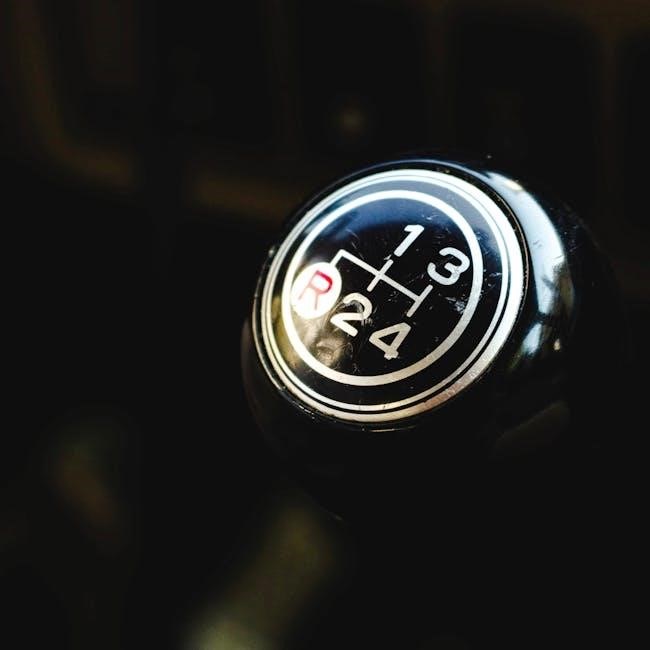
Converting from automatic to manual offers a more engaging driving experience, yet involves complex mechanical work and significant financial investment.
Vehicles’ transmissions, second only to engines in complexity, are crucial for power delivery, making swaps a substantial undertaking for enthusiasts.
Why Swap? The Appeal of Manual Control
For many driving enthusiasts, the allure of a manual transmission lies in the enhanced connection and control it provides over the vehicle. Unlike automatics, manuals demand active driver participation, fostering a more immersive and rewarding experience. This direct engagement translates to precise gear selection, improved responsiveness, and a greater sense of driving skill.
Beyond the driving feel, a manual swap can address perceived shortcomings of the original automatic, potentially improving efficiency and reliability. The appeal extends to those seeking a more classic or sporty driving character, transforming a mundane commute into an enjoyable pursuit. It’s a pursuit of driving purity.
Is a Transmission Swap Right for You?
Embarking on an automatic-to-manual transmission swap isn’t a decision to take lightly. It requires honest self-assessment of your mechanical skills, available time, and financial resources. Are you comfortable with complex mechanical work, or will professional assistance be necessary? Consider the potential for unforeseen complications and the time commitment involved.
Furthermore, evaluate if the benefits of a manual transmission truly align with your driving needs and preferences. Daily commutes in heavy traffic might diminish the enjoyment, while spirited weekend drives could be significantly enhanced. Thorough research and realistic expectations are crucial before proceeding.
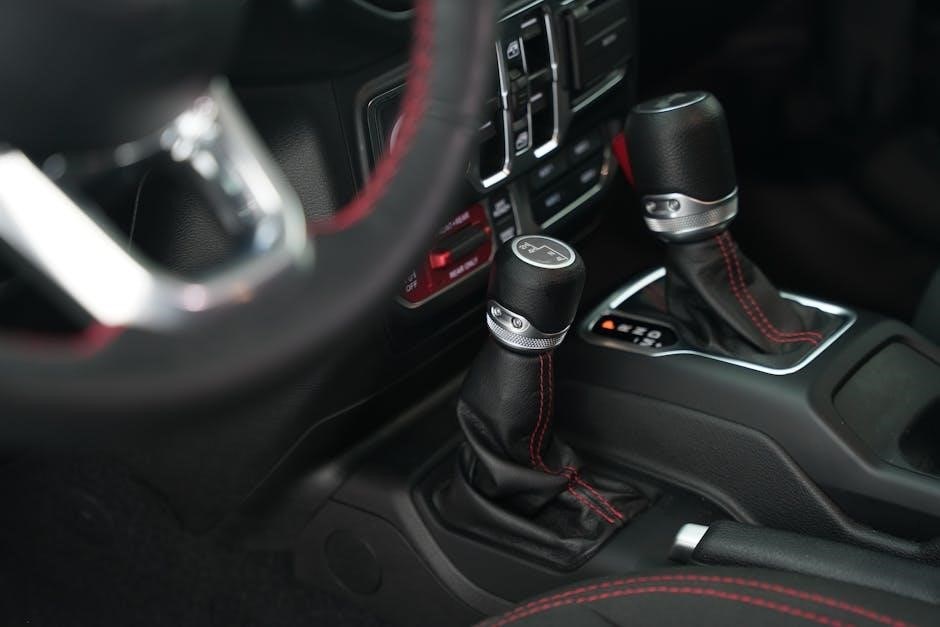
Cost Breakdown: Parts Required for the Swap
A complete swap demands more than just the transmission; factor in a clutch kit, flywheel, shifter, pedal assembly, and potentially ECU tuning for compatibility.
Transmission Unit Itself
The core expense is, naturally, the manual transmission. Prices fluctuate wildly based on vehicle make, model, condition (new, used, rebuilt), and gear ratios. A used transmission can range from $300 to $1,500, depending on its source and mileage.
New transmissions represent a significant investment, easily exceeding $2,000 and potentially reaching $5,000 or more for performance-oriented or rare units. Rebuilt options offer a balance, typically falling between $1,000 and $3,000, providing a refreshed unit with some warranty protection. Thorough research is crucial to secure a reliable transmission.
Clutch Kit (Disc, Pressure Plate, Throwout Bearing)
A complete clutch kit – encompassing the disc, pressure plate, and throwout bearing – is essential alongside the transmission. Expect to spend between $200 and $800 for a quality kit, varying with brand and vehicle specifications. Performance-oriented clutches, designed for higher horsepower, will naturally command a higher price.
Choosing a kit matched to your engine’s power output is vital. Ignoring this can lead to premature wear or slippage. Don’t skimp on this component; a failing clutch negates the benefits of the manual swap.
Flywheel
The flywheel is a critical component, often requiring replacement or resurfacing during a manual transmission swap. A new flywheel typically ranges from $150 to $500, depending on material (steel or aluminum) and vehicle model. Lightweight flywheels enhance engine responsiveness but may reduce low-end torque.
Resurfacing an existing flywheel is a cheaper option, costing around $50-$100, but it’s only viable if the flywheel isn’t excessively worn or damaged. Ensure proper balancing for smooth operation and to prevent vibrations.
Shifter Assembly & Linkages
A complete shifter assembly, including the base, knob, and connecting linkages, generally costs between $200 and $600. Short-throw shifters, offering quicker gear changes, are available for $300-$800. Compatibility is key; ensure the assembly matches the transmission and vehicle floor console.
Used shifter assemblies can be found for around $100-$300, but condition varies. New linkage bushings ($20-$50) are recommended for precise shifting and to eliminate slop, improving the overall driving experience.
Pedal Assembly (Clutch Pedal & Master Cylinder)
Installing a clutch pedal assembly typically ranges from $300 to $700, depending on the vehicle and whether it’s a complete kit. A new master cylinder adds another $150 to $300. Sourcing used pedals can save money ($100-$250), but inspect for wear and proper function.
Don’t forget the clutch line ($50-$100) and potentially a brake booster modification if space is limited. Proper installation is crucial for safe and reliable clutch operation, impacting driving feel significantly.
ECU Tuning/Standalone Management
ECU tuning is vital post-swap, costing $500 to $1500 for a custom tune, addressing sensor differences and optimizing performance. A standalone engine management system (EMS) can range from $1000 to $3000, offering greater control but requiring extensive setup.
Some vehicles may require wiring harness modifications ($200-$500) to integrate with the new transmission. Ignoring ECU adjustments can lead to poor performance, drivability issues, and even engine damage, making it a non-negotiable expense.
Driveshaft Modifications
Driveshaft adjustments are frequently needed due to differing lengths between automatic and manual transmission setups, costing $300 to $800 for shortening or lengthening. Custom driveshafts, essential for certain swaps, can reach $1000 or more.
Balancing the driveshaft ($100-$200) is crucial to prevent vibrations. Some vehicles may require a complete driveshaft replacement, adding to the overall expense. Ignoring driveshaft issues can lead to premature wear and potential drivetrain failure.
Wiring Harness Modifications
Expect to spend $200 to $600 on wiring modifications, as manual transmissions require connections for things like the reverse light switch and potentially a vehicle speed sensor; Custom wiring harnesses, or professional modification services, can easily exceed $800.
Integrating the new transmission’s sensors with the vehicle’s existing electrical system often necessitates splicing, soldering, and careful circuit tracing. Electrical “gremlins” are common post-swap, requiring diagnostic time and further adjustments.
Mounting Hardware & Bushings
Budget between $150 and $400 for new mounting hardware and bushings. Often, the original hardware won’t align perfectly, or may be corroded, necessitating replacements. Upgraded polyurethane bushings ($200-$300) improve shift feel and reduce drivetrain movement.
Crossmember adjustments or even fabrication might be needed, adding to the cost. Ignoring worn bushings leads to imprecise shifting and increased vibration, diminishing the swap’s benefits. Ensure compatibility with both the chassis and the new transmission.
Labor Costs: Professional Installation vs. DIY
Professional installation typically ranges from $1,500 to $3,500, while a DIY approach saves labor costs but demands significant mechanical skill and time.
Professional Installation Costs
Entrusting a transmission swap to professionals provides expertise and efficiency, but comes at a premium. Labor charges generally fall between $1,500 and $3,500, varying based on vehicle complexity and shop rates. This figure encompasses disassembly, installation, fluid filling, and initial testing.
Expect additional costs for diagnostic scans, potential alignment adjustments, and addressing unforeseen issues discovered during the process. Shops specializing in performance or custom work may charge higher hourly rates. Obtaining detailed quotes from multiple shops is crucial for comparison and budgeting.
DIY Considerations & Skill Level
Attempting a transmission swap yourself demands significant mechanical aptitude and specialized tools. This isn’t a beginner project; prior experience with automotive repair, particularly drivetrain work, is essential. Thorough research, detailed manuals, and online resources are vital for success.
Be prepared for potential challenges, including stubborn bolts, wiring complexities, and the need for custom adjustments. A lack of experience can lead to costly mistakes or safety hazards. Honestly assess your skills before committing to a DIY swap.
Time Investment for a DIY Swap
A DIY automatic to manual transmission swap is a substantial time commitment, easily spanning a weekend to several weeks, depending on your experience and the vehicle. Disassembly, parts cleaning, installation, and troubleshooting each consume considerable hours.
Factor in time for sourcing parts, potential delays due to unforeseen issues, and meticulous attention to detail. Don’t underestimate the effort required for wiring modifications or custom fabrication. Realistic planning and dedicated time blocks are crucial for completion.

Vehicle-Specific Costs & Considerations
Certain platforms, like Honda, BMW, and Subaru, have greater swap support, but part availability and fabrication needs vary significantly by vehicle model.
Popular Swap Platforms (Honda, BMW, Subaru)
Honda platforms, particularly those from the 90s and early 2000s, boast a robust aftermarket and plentiful donor vehicles, simplifying the process and reducing costs. BMW’s E36 and E46 generations are also popular, though often requiring more specialized knowledge.
Subaru’s Impreza and WRX models present unique challenges and benefits, with strong community support but potentially higher costs for specific components. These platforms generally offer readily available swap kits and detailed guides, easing the conversion for enthusiasts. However, vehicle-specific nuances always exist.
Rarity of Parts for Specific Vehicles
For less common vehicles, sourcing a compatible manual transmission and associated components can dramatically inflate costs and extend project timelines. Certain models may require extensive fabrication or custom modifications due to limited aftermarket support.
Older or niche vehicles often present challenges in locating clutch kits, flywheel options, or even suitable shifter assemblies. This scarcity drives up prices on the used market, potentially exceeding the cost of parts for popular swap platforms. Thorough research is crucial before committing to a swap on a rare vehicle.
Potential for Custom Fabrication
Many swaps necessitate custom fabrication, adding significantly to the overall expense. This might include modifying the transmission mount, creating a new driveshaft, or adapting the pedal assembly.
Vehicles not originally offered with a manual transmission often lack pre-made solutions, demanding skilled welding, metalwork, and potentially 3D-printed components. The cost of professional fabrication can quickly escalate, especially for complex modifications. Accurate measurements and careful planning are essential to minimize fabrication needs.

Hidden Costs & Potential Issues
Unexpected issues like worn parts or electrical gremlins frequently arise during swaps, inflating the budget and extending the project timeline considerably.
Unexpected Parts Replacements
During a transmission swap, anticipate needing more than just the core components. Often, seemingly unrelated parts reveal wear or damage upon inspection during disassembly. Expect to potentially replace seals, gaskets, or even worn bushings that weren’t initially budgeted for.
Old hardware can break during removal, necessitating immediate replacements. Furthermore, the age of the vehicle often dictates the need for additional fluid lines or brackets, adding to the overall expense. Thorough inspection is key, but unforeseen replacements are almost guaranteed.
Driveshaft Balancing
After a transmission swap, especially when changing transmission types, driveshaft balancing is crucial. Altered rotational speeds and angles can induce vibrations, leading to premature wear and potential damage to the transmission and differential.
Professional balancing, typically costing between $150 and $300, involves precisely adjusting the driveshaft’s weight distribution; Ignoring this step can result in a noisy, uncomfortable ride and costly repairs down the line, making it a vital, though often overlooked, expense.
Cooling System Modifications
Manual transmissions, particularly in performance applications, generate significant heat. While often overlooked, adequate cooling is essential to prevent fluid breakdown and component failure post-swap.
Adding an auxiliary transmission cooler, ranging from $100 to $300 plus installation, can be a worthwhile investment. This is especially true for vehicles driven aggressively or in hot climates. Failing to address cooling needs could lead to premature transmission wear and necessitate costly repairs, impacting the overall swap investment.
Potential for Electrical Gremlins
Swapping transmissions often necessitates modifications to the vehicle’s wiring harness, introducing potential electrical issues. Disconnecting and reconnecting sensors, or integrating new wiring for manual controls, can create unforeseen problems.
Budgeting $200-$500 for diagnostic tools and potential sensor replacements is prudent. Expect to troubleshoot issues like incorrect shift indicator behavior or communication errors. A skilled automotive electrician can mitigate these risks, but adds to the overall cost.
Finding Parts: New, Used, or Rebuilt?
Sourcing a transmission involves choices: new offers reliability, used is budget-friendly but risky, and rebuilt provides a balance of cost and assurance.
Pros and Cons of New Transmissions
Opting for a brand-new transmission guarantees peak performance and longevity, eliminating the uncertainties associated with pre-owned units. A full warranty provides peace of mind, covering potential defects and failures. However, new transmissions represent the highest upfront cost, significantly impacting the overall swap budget.
The price can easily exceed several thousand dollars, depending on the vehicle and transmission type. While offering superior reliability, a new unit might not be the most practical choice for budget-conscious enthusiasts undertaking a DIY swap, especially considering other necessary components.
Sourcing Used Transmissions: Risks & Rewards
Used transmissions offer a cost-effective alternative, drastically reducing the swap’s financial burden. However, they come with inherent risks; the unit’s history is often unknown, potentially concealing internal wear or impending failure. Thorough inspection is crucial, but even then, issues may remain undetected.
Rewards include significant savings, allowing allocation of funds to other essential components. A careful search through salvage yards or online marketplaces can yield affordable options, but buyer beware – a gamble is always involved.
Rebuilt Transmissions: A Middle Ground
Rebuilt transmissions strike a balance between the affordability of used units and the reliability of new ones. These units have been disassembled, inspected, and had worn components replaced, offering increased confidence compared to a completely unknown used gearbox.
While more expensive than sourcing used, they typically come with a warranty, providing peace of mind. This option minimizes risk, offering a dependable solution for your manual swap without the premium price tag of a brand-new transmission.

Tools Required for a DIY Transmission Swap
A successful DIY swap demands a comprehensive toolkit, including jacks, stands, wrenches, sockets, and specialized tools like a transmission jack and alignment tools.
Essential Tools
For a DIY transmission swap, a robust set of hand tools is paramount. This includes a full socket set (metric and standard), various wrenches – open-end, box-end, and ratcheting – and a torque wrench for precise tightening.
Jack stands are non-negotiable for safety, alongside a hydraulic floor jack capable of lifting the vehicle securely. You’ll also need penetrating oil, screwdrivers, pliers, and a hammer. Don’t forget safety glasses and gloves!
Basic mechanics knowledge and a repair manual specific to your vehicle are also essential components of your toolkit, ensuring a smoother process.
Specialized Tools
Beyond the basics, a transmission swap demands specialized equipment. A transmission jack is crucial for safely lowering and raising the heavy gearbox. Alignment tools ensure proper clutch disc centering, preventing damage during installation.
You might need a flywheel locking tool to hold the flywheel stationary while tightening the crankshaft bolt. A pilot bearing puller simplifies removing the old pilot bearing.
Depending on the vehicle, a spring compressor for the clutch disc may be necessary, alongside diagnostic tools for ECU tuning and potential electrical troubleshooting.
Total Cost Estimate: A Realistic Range
Expect a manual transmission swap to range from $1,500 to $5,000+, depending on parts chosen, vehicle type, and labor costs involved.
Low-End Estimate (Used Parts, DIY)
For the budget-conscious enthusiast tackling the swap themselves, a low-end estimate typically falls between $1,500 and $2,500. This assumes sourcing a used transmission, clutch kit, and shifter assembly. Expect to spend around $500-$800 on the transmission itself, with another $200-$400 for the clutch components.
Additional costs include a used flywheel ($100-$200), basic linkages, and potentially some fabrication for mounting. However, this requires significant mechanical skill and time, and doesn’t account for unforeseen issues or replacement parts needed during the process.
Mid-Range Estimate (Mix of New & Used, Some Professional Help)
A balanced approach, combining new and used parts with limited professional assistance, generally costs between $3,000 and $5,000. This might involve a new clutch kit ($500-$800) and flywheel ($200-$300), paired with a used transmission in good condition ($800-$1200).
Budgeting $500-$1000 for professional help with wiring or ECU tuning is wise. Factor in driveshaft modifications ($300-$500) and potential bushing replacements. This scenario offers a good balance of cost and reliability, reducing the risk of major issues.
High-End Estimate (New Parts, Full Professional Installation)
Opting for a complete overhaul with all new components and professional installation easily exceeds $6,000, potentially reaching $8,000 or more. A new transmission alone can cost $2,000-$4,000, alongside a premium clutch kit ($800-$1,200) and flywheel ($300-$500).
Full labor costs, including wiring, ECU tuning, and driveshaft work, could range from $2,000-$3,000. This ensures maximum reliability and a seamless integration, minimizing future issues and offering peace of mind.

Long-Term Maintenance After the Swap
Regularly inspect shifter linkages, change transmission fluid as recommended, and anticipate clutch replacements every 30,000-50,000 miles for optimal performance.
Clutch Replacement Intervals
Post-swap, clutch longevity hinges on driving style; aggressive use drastically shortens lifespan. A typical street-driven vehicle, with moderate driving habits, can expect between 30,000 to 50,000 miles from a new clutch assembly.
However, factors like clutch material (organic, ceramic, or metallic), horsepower levels, and the weight of the vehicle significantly influence this range. Track days or frequent spirited driving may necessitate replacement as early as 15,000-20,000 miles. Regular inspection for slippage or changes in pedal feel is crucial for timely intervention and preventing further transmission damage.
Transmission Fluid Changes
Maintaining proper transmission fluid levels and quality is paramount after a manual swap. Initial fluid change should occur within the first 500-1,000 miles to remove any metal particles from the break-in period.
Subsequently, fluid changes should be performed every 30,000 to 60,000 miles, depending on the fluid type (conventional, synthetic) and driving conditions. Using the manufacturer’s recommended fluid is vital for optimal lubrication and preventing internal wear. Regular checks for leaks and maintaining the correct fluid level are essential for long-term transmission health.
Regular Inspection of Shifter Linkages
Post-swap, diligently inspect shifter linkages every 6 months or 6,000 miles. Check for looseness, wear, or damage to the rods, bushings, and mounting points. Any play in the linkages translates to imprecise shifting and potential for missed gears.
Lubricate linkage points with appropriate grease to ensure smooth operation. Tighten any loose connections and replace worn bushings promptly. Addressing these issues proactively prevents more significant problems and maintains a crisp, enjoyable driving experience, safeguarding your investment.
Resources for Transmission Swap Information
Online forums, technical manuals, and specialized automotive shops provide invaluable guidance and support for tackling a complex automatic-to-manual conversion.
Online Forums & Communities
Dedicated online forums and communities are essential resources for anyone considering an automatic to manual transmission swap. These platforms host a wealth of knowledge, with experienced enthusiasts sharing detailed guides, troubleshooting tips, and real-world cost breakdowns.
Searching specific vehicle model forums will yield the most relevant information, including common pitfalls and successful swap stories. Members often discuss parts sourcing, labor costs, and potential modifications needed for a smooth conversion. Active participation allows you to ask questions, receive personalized advice, and learn from others’ experiences, ultimately helping to refine your budget and plan.
Technical Manuals & Guides
Comprehensive technical manuals and detailed guides are indispensable for a successful automatic to manual transmission swap. Factory service manuals provide vehicle-specific instructions, torque specifications, and wiring diagrams crucial for accurate installation.
Aftermarket guides, often available online or in print, can supplement factory manuals with step-by-step instructions and photos tailored to the swap process. These resources detail component removal, installation procedures, and potential challenges. Investing in quality documentation minimizes errors, reduces frustration, and ensures a safer, more reliable outcome, impacting the overall cost.
Professional Automotive Shops Specializing in Swaps
Engaging a shop specializing in transmission swaps offers expertise and efficiency, though at a premium cost. These shops possess the necessary tools, experience, and knowledge to navigate the complexities of the conversion process effectively.
They can accurately assess vehicle compatibility, source appropriate parts, and handle intricate tasks like ECU tuning and wiring modifications. While more expensive than DIY, professional installation minimizes risks, ensures proper functionality, and often includes a warranty, providing peace of mind regarding the substantial investment.