The True Story of The Three Little Pigs: A Historical Overview
The tale’s roots stretch far beyond the 1840 publication date, originating in ancient oral traditions, evolving through countless retellings across generations and cultures.
Early documented versions surfaced before 1890, laying the groundwork for the story’s eventual widespread recognition and enduring appeal to audiences of all ages.
Joseph Jacobs’ 1890 collection significantly shaped the narrative, introducing the iconic “chinny chin chin” refrain and solidifying the third pig’s cleverness.
This enduring story continues to captivate readers, demonstrating its remarkable resilience and adaptability throughout history, remaining a beloved classic today.
Origins in Oral Tradition
Before appearing in print, “The Three Little Pigs” existed as a vibrant part of oral tradition, passed down through generations via storytelling; Its precise origins are difficult to pinpoint, lost in the mists of time, but the core themes resonate with ancient folklore.
Scholars believe variations of the tale circulated widely, evolving with each retelling, adapting to local customs and beliefs. These early versions likely lacked the standardized plot points we recognize today, featuring regional differences in characterization and events.
The story’s enduring appeal suggests it tapped into universal anxieties about vulnerability, resourcefulness, and the challenges of establishing independence. The narrative’s simplicity and memorable motifs – the building of houses, the menacing wolf – facilitated its transmission across communities.
This oral heritage laid the foundation for the story’s eventual literary form, providing a rich tapestry of influences that would shape its later development and enduring popularity. It’s a testament to the power of spoken word and communal storytelling.
Early Published Versions (Pre-1890)
Prior to Joseph Jacobs’ influential 1890 collection, several published iterations of “The Three Little Pigs” began to emerge, though these versions differed significantly from the tale we know today. These early publications demonstrate the story’s growing recognition and its transition from purely oral transmission to a more formalized literary form.
Details regarding these pre-1890 publications remain somewhat fragmented, but they reveal a narrative still in flux, undergoing refinement and adaptation. Early versions often lacked the now-iconic “chinny chin chin” refrain and featured variations in the wolf’s characterization and the pigs’ fates;
These publications helped to standardize elements of the story, establishing recurring motifs and character archetypes. They also broadened the tale’s audience, introducing it to a wider readership beyond the confines of oral storytelling circles.

These early printed forms were crucial stepping stones, paving the way for Jacobs’ definitive version and the story’s subsequent enduring popularity.
Joseph Jacobs and the 1890 Collection
Joseph Jacobs, a prominent English folklorist, played a pivotal role in solidifying “The Three Little Pigs” as a beloved children’s story with his 1890 publication, English Fairy Tales. His collection wasn’t simply a transcription; Jacobs actively shaped the narrative, contributing significantly to its enduring form.
Most notably, Jacobs introduced the now-famous refrain, “Not by the hair on my chinny chin chin!” This addition not only added a memorable element but also highlighted the third pig’s cleverness and resilience in outsmarting the wolf. This clever pig became an early symbol of wit.
Jacobs’ version standardized many elements of the story, creating a cohesive and engaging narrative that resonated with readers. His work helped to preserve and popularize traditional folklore, ensuring its transmission to future generations.
The 1890 collection remains a landmark publication, cementing Jacobs’ legacy as a key figure in the preservation of English fairy tales.
The “Chinny Chin Chin” Addition
The inclusion of the “chinny chin chin” refrain by Joseph Jacobs in his 1890 collection dramatically altered the trajectory of “The Three Little Pigs,” transforming it into the widely recognized tale we know today. This seemingly simple addition wasn’t merely a playful rhyme; it served a crucial narrative function.
The phrase acts as a taunt from the third pig, showcasing his confidence and intelligence while simultaneously provoking the wolf. It’s a pivotal moment of defiance, highlighting the pig’s strategic thinking and ultimately contributing to the wolf’s downfall.
Before Jacobs’ version, the story lacked this iconic element, relying more on simple repetition and the wolf’s failed attempts to blow down the brick house. The “chinny chin chin” line injected a layer of personality and wit, making the story more engaging and memorable.
This addition cemented the third pig as a symbol of cleverness and resilience, solidifying the story’s moral message about the importance of foresight and hard work.
The Mother Pig’s Role and Economic Hardship
The sow faced significant financial difficulties, unable to adequately provide for her three piglets, compelling her to send them out into the world to seek their fortunes.
The Sow’s Financial Struggles
The narrative consistently highlights the mother pig’s precarious economic situation as the primary catalyst for the story’s events. She simply lacked the resources to continue supporting her three growing sons, a hardship frequently emphasized in various versions of the tale.
This isn’t merely a plot device; it establishes a relatable context of necessity and the challenges faced by single-parent households, even within a fantastical framework. The sow’s inability to provide isn’t presented as negligence, but as a genuine struggle against circumstance.
The 1957 Junior Elf version explicitly details this financial strain, solidifying the mother pig’s motivation for sending her piglets away. This element adds a layer of depth, transforming the story from a simple cautionary tale into one with empathetic undertones regarding economic hardship and familial responsibility.
Her decision, though difficult, is framed as a proactive step towards ensuring her sons’ future well-being, driven by a mother’s love and a desperate need to secure their survival.
Sending the Pigs to Seek Fortune
Driven by economic necessity, the mother pig makes the difficult decision to dispatch her three sons into the world to “find their fame and fortune.” This act isn’t portrayed as abandonment, but rather as a pragmatic response to her inability to provide for them adequately.
The intention is clear: each piglet is tasked with establishing independence and securing their own livelihood. This sends them on individual journeys, setting the stage for the core narrative of building homes and facing adversity.
The 1957 Junior Elf version particularly emphasizes this aspect, framing the pigs’ departure as a quest for self-sufficiency. This element introduces themes of ambition, resourcefulness, and the challenges of navigating a world beyond the safety of home.
Ultimately, the mother’s directive isn’t simply about wealth accumulation; it’s about empowering her sons to become capable and resilient individuals, prepared to face life’s uncertainties.
The 1957 Junior Elf Version
The 1957 rendition, published by Junior Elf, offers a particularly poignant portrayal of the mother pig’s circumstances and motivations. This version distinctly highlights the sow’s financial struggles as the primary catalyst for sending her piglets away.
Unlike some adaptations, the Junior Elf edition explicitly details the mother’s inability to adequately support her sons, framing their departure not as a simple adventure, but as a necessity born of hardship. This adds a layer of emotional depth to the narrative.
It’s within this version that the emphasis on seeking “fame and fortune” is most pronounced, directly linking the pigs’ journey to their mother’s economic plight. This interpretation underscores themes of responsibility and self-reliance.
The Junior Elf version remains a significant touchstone in the story’s evolution, offering a unique perspective on the classic tale’s underlying social and economic context.
Variations and Modern Interpretations
Contemporary retellings, like Mark Teague’s work, explore the wolf’s perspective, portraying him as hungry and frustrated, challenging traditional villainous depictions.
Adaptations continue to reimagine the story, offering fresh insights and engaging new audiences with inventive narratives and artistic styles.
Mark Teague’s “The Three Little Pigs and the Somewhat Bad Wolf”
Mark Teague’s delightful reimagining, “The Three Little Pigs and the Somewhat Bad Wolf,” offers a refreshing and humorous twist on the classic tale. This version cleverly shifts the focus, presenting the wolf not as a purely malicious character, but as one driven by simple hunger and a touch of exasperation.
Teague’s wolf is denied service at a local pizza parlor, fueling his frustration and leading him to the pigs’ houses. The narrative emphasizes the wolf’s attempts to secure a meal, rather than focusing on destructive intent. This nuanced portrayal invites empathy and challenges the traditional villain archetype.
The book’s vibrant illustrations and playful tone further enhance the comedic effect, making it a captivating read for children and adults alike. It’s a brilliant example of how classic stories can be reinterpreted to offer new perspectives and promote understanding.
The Wolf’s Perspective: Hunger and Frustration
A modern interpretation of “The Three Little Pigs” increasingly emphasizes the wolf’s motivations, portraying him not as inherently evil, but as a creature driven by basic needs – specifically, intense hunger. This perspective reframes the narrative, suggesting his actions stem from desperation rather than malice.
Mark Teague’s work notably highlights this frustration, depicting a wolf denied service at a pizza parlor, leading to his pursuit of the pigs. This detail humanizes the wolf, illustrating a relatable experience of being refused sustenance. The story subtly suggests a lack of alternatives fuels his actions.
By exploring the wolf’s viewpoint, the tale encourages empathy and challenges simplistic notions of good versus evil. It prompts consideration of circumstances and motivations, offering a more complex understanding of the characters involved and the events unfolding.
Modern Retellings and Adaptations
Contemporary authors and illustrators continue to reimagine “The Three Little Pigs,” offering fresh perspectives and innovative approaches to this classic tale. These adaptations often explore themes of empathy, problem-solving, and challenging traditional narratives.
Mark Teague’s “The Three Little Pigs and the Somewhat Bad Wolf” stands out as a prime example, presenting a sympathetic portrayal of the wolf and injecting humor into the familiar storyline. This version subverts expectations, prompting readers to reconsider the wolf’s character.
Beyond picture books, the story inspires adaptations across various media, including theatrical productions and animated shorts. These modern retellings demonstrate the story’s enduring appeal and its capacity to resonate with new generations, ensuring its continued relevance in popular culture.
Construction and Symbolism
Each house represents a different approach to life: straw embodies impulsivity, sticks signify a moderate effort, and brick symbolizes foresight and lasting resilience.
The building materials aren’t just structural choices; they’re metaphors for character traits and the consequences of prioritizing short-term gains over long-term security.
The Straw House: Impulsivity and Weakness
The first little pig’s decision to build a house of straw is a clear demonstration of impulsivity and a lack of foresight. He prioritizes speed and ease over durability, seeking immediate gratification rather than investing in a secure future.
This choice symbolizes a willingness to take shortcuts and a disregard for potential consequences. The straw house, quickly constructed, offers minimal protection against the elements – and, crucially, against the wolf.
Its fragility represents the inherent weakness of a foundation built on flimsy materials and hasty decisions. The ease with which the wolf demolishes the straw house serves as a cautionary tale, illustrating the vulnerability that comes with prioritizing convenience over careful planning and robust construction.
Ultimately, the straw house embodies a lack of preparedness and a naive belief that immediate comfort is more important than long-term safety.
The Stick House: A Step Up, But Still Vulnerable
The second little pig’s choice of sticks for his house represents a slight improvement over straw, indicating a marginally increased level of effort and planning. However, it remains fundamentally flawed, demonstrating a continued prioritization of speed over substantial security.
While stronger than straw, sticks still lack the inherent durability needed to withstand a determined attack. This construction method suggests a willingness to compromise, seeking a middle ground between immediate ease and genuine protection.
The stick house embodies a degree of foresight, acknowledging the inadequacy of straw, but ultimately falling short of providing true resilience. The wolf’s eventual success in blowing down the stick house highlights its inherent vulnerability, serving as a lesson in the limitations of half-measures.
It’s a step in the right direction, but ultimately insufficient against a persistent threat.
The Brick House: Foresight and Resilience
The third little pig’s decision to build his house from bricks symbolizes a commitment to long-term security and a willingness to invest significant effort. This demonstrates foresight, understanding the potential dangers and proactively preparing for them.
Unlike his brothers, he prioritizes durability over convenience, recognizing that a solid foundation is essential for withstanding adversity. The brick house represents resilience, a steadfast refusal to succumb to immediate pressures.
The wolf’s repeated, unsuccessful attempts to destroy the brick house underscore its strength and the pig’s wise decision-making. It’s a testament to the power of planning, perseverance, and a dedication to quality craftsmanship.
This house isn’t just shelter; it’s a symbol of enduring strength and intelligent preparation.
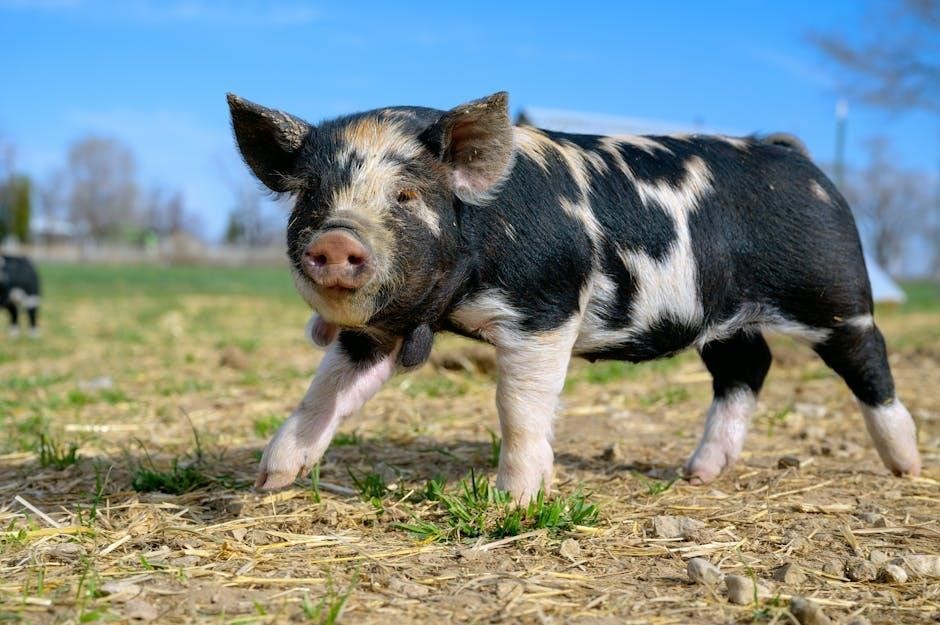
Publication History and Timeline
The first published version appeared in 1840, though the story’s origins are much older. It became widely available online around 2018, and continues to thrive today!
First Publication Date: 1840
While the oral tradition of “The Three Little Pigs” predates written records by centuries, the first documented publication emerged in 1840. This initial appearance wasn’t the polished, familiar tale we know today; rather, it represented one iteration among many circulating folk stories.
Details surrounding this 1840 publication remain somewhat scarce, lacking the widespread distribution and recognition that would come later. However, it marks a pivotal moment – the transition of a beloved oral narrative into a tangible, printed form.
This early version featured the core elements of the story: the three pigs, their respective houses constructed from straw, sticks, and brick, and the menacing wolf. It established the fundamental conflict and moral lessons that would resonate with audiences for generations, setting the stage for future adaptations and popularizations.
The 1840 publication served as a crucial stepping stone in the story’s evolution, preserving a snapshot of the tale as it existed at that specific point in time.
Short Édition Online Availability (7+ Years)
For over seven years and five months, “The Three Little Pigs” has been readily accessible online through the Short Édition platform. This digital availability has broadened the story’s reach, introducing it to a new generation of readers and offering convenient access for those seeking a quick literary escape.
Short Édition’s format caters to modern reading habits, providing a concise and easily digestible version of the classic tale. This accessibility has contributed to the story’s continued popularity in the digital age, ensuring its relevance beyond traditional print formats.
The platform’s online presence allows for easy sharing and discovery, fostering a sense of community around this beloved children’s story. It demonstrates how classic narratives can thrive and adapt in the ever-evolving landscape of digital media.
This sustained online availability underscores the enduring appeal of “The Three Little Pigs,” confirming its status as a timeless favorite.
Ongoing Popularity and Enduring Appeal
“The Three Little Pigs” maintains remarkable popularity, captivating audiences across generations with its simple yet profound narrative. Its enduring appeal stems from universal themes of resourcefulness, perseverance, and the triumph of cleverness over brute force, resonating deeply with both children and adults.
The story’s adaptability allows for countless retellings and interpretations, ensuring its continued relevance in a changing world. From traditional versions to modern adaptations like Mark Teague’s work, the core message remains consistently engaging.
The tale’s accessibility, bolstered by online platforms like Short Édition, further contributes to its widespread recognition. It continues to be a staple in early childhood education and a beloved bedtime story worldwide.
Ultimately, “The Three Little Pigs” stands as a testament to the power of storytelling, proving that a well-crafted narrative can transcend time and cultural boundaries.