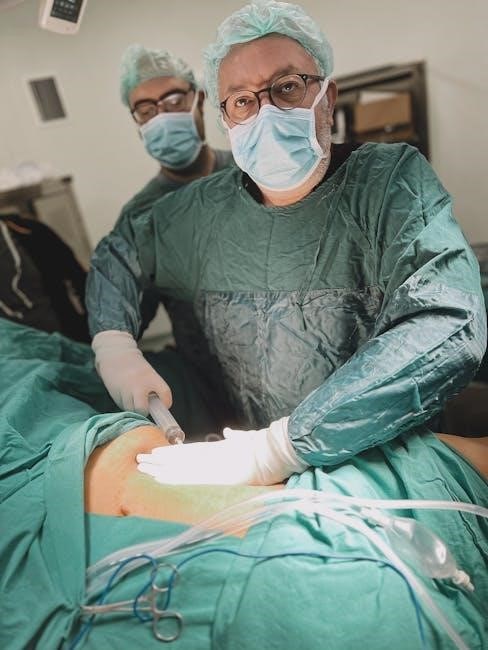
Fast Facts for the Operating Room Nurse, a vital resource (ISBN: 9780803612266), offers a concise orientation and care guide for surgical professionals.
Purpose and Scope of the Guide

This pocket guide serves as a rapid-reference tool, designed to support operating room nurses and students in delivering safe, effective patient care. It consolidates essential information, streamlining access to critical facts at the point of need.
The scope encompasses fundamental principles of perioperative practice, including surgical asepsis, patient positioning, and instrumentation. It aims to bridge the gap between theoretical knowledge and practical application. Resources like Mosby’s PDQ for Surgical Technology are invaluable.
Furthermore, it facilitates adherence to AORN Guidelines, promoting standardized processes and enhancing patient safety within the dynamic operating room environment.
Target Audience: Operating Room Nurses and Students
This guide is specifically tailored for operating room nurses, ranging from newly qualified practitioners to experienced professionals seeking a quick reference. It’s also an ideal resource for surgical technology students preparing for certification, utilizing study guides like the Surg Tech Certifying Exam Study Guide.
The content is structured to support both clinical practice and academic learning, offering a practical orientation and reinforcing core competencies.
Its accessibility makes it suitable for quick consultations during procedures, ensuring informed decision-making and promoting best practices in perioperative care.

Key Content Areas Covered
This essential guide encompasses surgical asepsis, patient positioning, instrumentation, and equipment – foundational elements for safe and effective operating room practice.
Surgical Asepsis and Infection Control
Maintaining surgical asepsis is paramount, with 2-5% of patients facing surgical site infections (SSIs). This guide emphasizes rigorous infection control practices within the operating room environment.
Effective strategies for SSI prevention are detailed, aligning with hospital-wide infection control protocols. Resources like the Guide to Infection Control in the Hospital, specifically Chapter 22 focusing on the operating room, provide crucial insights.
Understanding patient issues and implementing suggested practices, even in under-resourced settings, are key components of this critical area of perioperative care.
Patient Positioning and Safety
Prioritizing patient safety throughout the perioperative phase is essential. The Handbook of Perioperative and Procedural Patient Safety offers a comprehensive review of current practices, emphasizing a concise yet thorough approach.
Standardized processes, as highlighted in Clinical Procedures for Safer Patient Care, are crucial for clinical skills and maintaining current procedural practice. This guide aims to support both nursing schools and clinical partners.
Implementing checklists and adhering to established guidelines contribute to a safer environment for patients undergoing surgical procedures.
Instrumentation and Equipment
Mosby’s PDQ for Surgical Technology (ISBN unavailable from provided text) serves as a crucial “Necessary Facts at Hand” resource for surgical technologists, offering quick access to essential information.
Understanding the proper use and maintenance of surgical instrumentation and equipment is paramount for efficient and safe operations.
While the provided text doesn’t detail specific instrumentation, it emphasizes the need for current procedural practice and standardized processes, implicitly relating to equipment proficiency.

Perioperative Standards and Guidelines
AORN provides access to operating room standards and perioperative guidelines, including the 2026 edition with 36 updated guidelines for safety.
AORN Guidelines for Perioperative Practice (2026 Edition)
AORN’s 2026 edition of Guidelines for Perioperative Practice represents the gold standard in perioperative care. This comprehensive resource features 36 guidelines, each meticulously updated to address today’s most critical patient safety concerns within the operating room environment.
These guidelines serve as building blocks for implementing facility-wide standardized processes. They offer evidence-based recommendations, promoting best practices and minimizing risks. Access to these tools is invaluable for ensuring consistent, high-quality care and fostering a culture of safety for both patients and staff.
Perioperative Patient Safety – A Comprehensive Review
Handbook of Perioperative and Procedural Patient Safety, selected for Doody’s Core Titles 2024, delivers a concise yet thorough review of current surgical practices focused on patient well-being. This up-to-date resource provides practical insights into minimizing risks and optimizing outcomes throughout the entire perioperative phase.
It emphasizes a holistic approach to safety, covering essential elements from pre-operative assessment to post-operative recovery. The handbook’s comprehensive nature makes it an invaluable tool for all members of the surgical team, promoting a safer environment for every patient.

Essential Surgical Procedures & Techniques
Clinical Procedures for Safer Patient Care utilizes a checklist approach, aiming for standardized processes and keeping procedural practice current for nurses.
Common Surgical Procedures Overview
Understanding the breadth of surgical interventions is crucial for operating room personnel. While a comprehensive listing exceeds this scope, recognizing frequently encountered procedures is paramount. These include, but aren’t limited to, orthopedic surgeries, general abdominal procedures, and vascular interventions.
Effective surgical practice relies on standardized processes, as highlighted by resources like Clinical Procedures for Safer Patient Care. Implementing surgical checklists, a cornerstone of patient safety, ensures all critical steps are addressed.
Staying current with evolving techniques and protocols is essential, demanding continuous professional development and access to updated guidelines.
Surgical Checklist Implementation
Surgical checklists are pivotal for enhancing patient safety and minimizing errors within the operating room environment. Resources like Clinical Procedures for Safer Patient Care emphasize the checklist approach to standardize clinical skills and maintain current procedural practices.
Effective implementation requires a team-based approach, ensuring all members actively participate in verifying critical steps before, during, and after surgery.
Consistent adherence to checklists promotes clear communication, reduces preventable complications, and ultimately improves patient outcomes, aligning with perioperative standards.

Resources for Surgical Technologists
Essential study aids include the Surg Tech Certifying Exam Study Guide and Mosby’s PDQ for Surgical Technology, providing necessary facts at hand.
Surg Tech Certifying Exam Study Guides
Preparing for the surgical technologist certification exam requires dedicated study resources. Currently, a Surg Tech Certifying Exam Study Guide 3rd Ed is available in spiral-bound format for $109.00, with delivery expected between February 11th and 16th, 2026.
These guides are designed to comprehensively cover the essential knowledge areas tested on the exam, including surgical techniques, instrumentation, and patient safety protocols. Utilizing practice questions and detailed explanations, students can effectively assess their understanding and identify areas needing further review.
Success on the certification exam is crucial for launching a successful career as a surgical technologist.
Mosby’s PDQ for Surgical Technology
Mosby’s PDQ for Surgical Technology serves as an invaluable “Necessary Facts at Hand” resource for both students and practicing surgical technologists. This spiral-bound guide, currently priced at $29.99, provides quick access to essential information needed in the fast-paced operating room environment.
Its concise format and organized content make it ideal for rapid reference during procedures and clinical rotations. The PDQ covers a wide range of surgical specialties, instrumentation, and commonly performed procedures, ensuring technologists have the knowledge readily available.
Delivery is expected as early as February 4th, 2026.

Pediatric Surgical Considerations
Essentials of Pediatric Nursing Surgical Guidelines are crucial, addressing unique perioperative challenges and ensuring safe practices for young patients undergoing procedures.
Essentials of Pediatric Nursing Surgical Guidelines
Pediatric surgical care demands specialized knowledge due to physiological differences and developmental stages. Essentials of Pediatric Nursing Surgical Guidelines provide a framework for safe and effective care, addressing unique challenges like airway management, thermoregulation, and pain control in children.
These guidelines emphasize family-centered care, recognizing the crucial role of parents and caregivers in the perioperative process. They cover pre-operative preparation, intraoperative monitoring, and post-operative recovery specific to pediatric patients. Understanding these nuances is paramount for minimizing anxiety and optimizing outcomes. Resources like these are vital for nurses and students.
Unique Challenges in Pediatric Perioperative Care

Pediatric patients present distinct challenges during surgery, requiring heightened awareness and specialized techniques; Maintaining hemodynamic stability is crucial, as children respond differently to anesthesia and fluid shifts. Airway management can be complex due to anatomical variations and potential for laryngospasm.
Emotional distress is also significant; separation anxiety and fear are common. Effective communication and distraction techniques are essential. Furthermore, thermoregulation is less efficient in children, increasing the risk of hypothermia. Addressing these unique needs ensures optimal safety and positive surgical experiences.

Addressing Surgical Site Infections
Surgical site infections (SSIs) affect 2-5% of surgical patients, highlighting the critical need for stringent infection control practices within the OR.
SSI Incidence and Prevention Strategies
Surgical Site Infections (SSIs) represent a significant challenge, impacting 2 to 5 percent of patients undergoing surgical procedures. Effective prevention necessitates a multi-faceted approach, emphasizing meticulous surgical asepsis and robust infection control protocols.
These strategies must encompass proper preoperative skin preparation, judicious antibiotic prophylaxis, and maintaining a sterile operating room environment. Furthermore, adherence to established guidelines, such as those provided by AORN, is paramount.
Continuous monitoring of SSI rates and implementation of evidence-based practices are crucial for minimizing patient risk and improving overall surgical outcomes. Resources like the Pocket Guide can reinforce these essential principles.
Infection Control Practices in the Operating Room
Maintaining a sterile environment within the operating room is fundamental to patient safety. Infection control relies heavily on strict adherence to surgical asepsis, encompassing proper hand hygiene, sterile gowning and gloving, and meticulous instrument sterilization.
The Pocket Guide to the Operating Room likely reinforces these core principles, providing quick reference for best practices. Environmental cleaning and disinfection protocols are also vital, alongside appropriate waste management procedures.
Ongoing education and training for all OR personnel are essential to ensure consistent application of these practices, minimizing the risk of surgical site infections and promoting optimal patient outcomes.

Staying Current with Operating Room Practices
Clinical Procedures for Safer Patient Care emphasizes standardized processes and checklist approaches, ensuring procedural practice remains current within the operating room environment.
The Importance of Standardized Processes
Standardized processes are paramount in the operating room, directly impacting patient safety and minimizing potential errors. Resources like Clinical Procedures for Safer Patient Care advocate for a checklist approach, fostering consistency in clinical skills.
This methodology assists nursing schools and clinical partners in maintaining up-to-date procedural practices. The 2026 AORN Guidelines for Perioperative Practice, with 36 updated guidelines, further reinforce the need for facility-wide implementation of these standardized protocols.
Ultimately, embracing these processes ensures a higher quality of care and a safer environment for both patients and the surgical team.
Updates and Revisions in Perioperative Care
Perioperative care is a continually evolving field, demanding consistent updates to practices and guidelines. The 2026 edition of AORN Guidelines for Perioperative Practice includes critical revisions addressing today’s essential safety topics, encompassing 36 updated guidelines.
Staying current is vital, as evidenced by resources like the Handbook of Perioperative and Procedural Patient Safety, offering a comprehensive review of current practices.
Professionals must prioritize ongoing education and adaptation to ensure optimal patient outcomes and adherence to the latest standards.