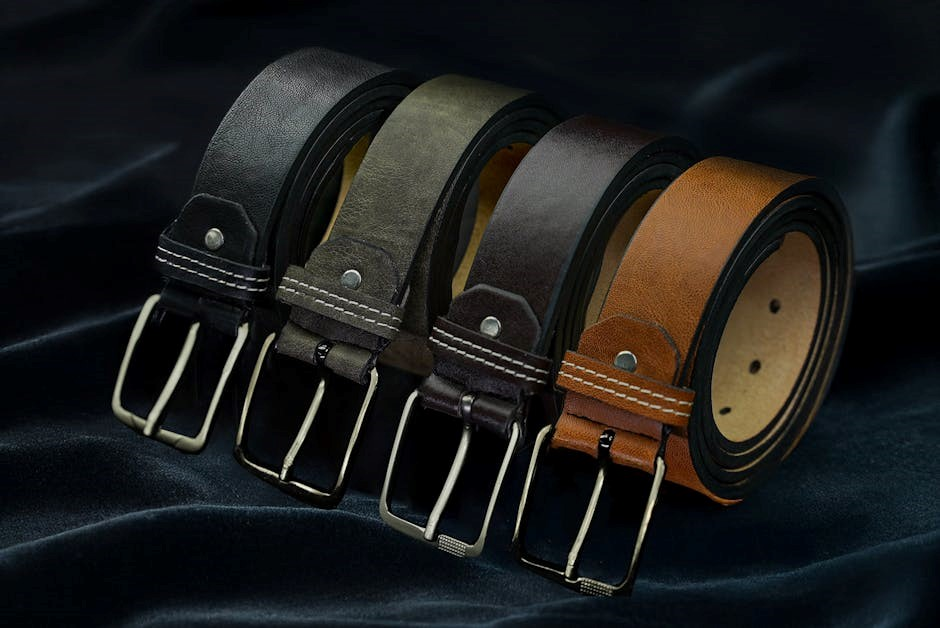
Understanding Belt Sizing: A Comprehensive Guide
Navigating the world of belts requires understanding sizing nuances; this guide offers a detailed exploration, ensuring a perfect fit for various body types and styles.
What Determines Your Belt Size?
Determining your ideal belt size isn’t simply about your waist measurement; several factors contribute to a comfortable and secure fit. Primarily, where you intend to wear the belt – at the natural waist, hips, or lower – significantly impacts the required size.
For instance, tool belts and work belts are typically worn around the hips, necessitating a measurement taken at that point, often larger than your standard waist size. Conversely, fashion belts worn at the natural waist require a measurement taken there.
Clothing size can be a starting point, but it’s not always accurate due to variations between brands and styles. Therefore, direct measurement using a tape measure or string is crucial for precision, ensuring the belt sits snugly but not too tightly.
Waist vs. Belt Size: Key Differences
While seemingly interchangeable, waist and belt sizes are distinct measurements; confusing them leads to ill-fitting belts. Your waist measurement is taken around your natural waistline – typically just above the navel – and reflects your body’s circumference at that point.
Belt size, however, refers to the length of the belt itself, and is usually measured from where the belt meets the buckle to the middle hole. Generally, your belt size is several inches larger than your waist size, allowing for overlap and secure fastening.
A common rule of thumb is to add 2-4 inches to your waist measurement to determine your approximate belt size. However, individual preferences and belt style influence the ideal fit, making direct measurement essential for accuracy.
Standard Belt Size Charts (US & EU)
Belt sizing varies between regions, necessitating separate charts for US and EU standards; understanding these differences ensures a correct purchase. In the US, belt sizes are typically indicated in inches, starting from 30 inches and increasing in 2-inch increments (32, 34, 36, etc.).
European belt sizes are commonly expressed using a numerical system (e.g., 80, 85, 90), which corresponds to centimeters. A size 80 belt equates to 80cm in length. Conversion is crucial when shopping across borders.
Here’s a simplified overview: US 30-32 waist often requires a 32-34 inch belt. EU size 34 (waist 86.4cm) generally needs a belt size of 90cm. Always consult a detailed chart for precise matching, as slight variations exist between brands.
Men’s Belt Size Chart
For men, determining the correct belt size typically involves referencing waist measurements; however, it’s not a direct correlation. A common guideline suggests adding 2-4 inches to your actual waist size to find your belt size. For example, a 34-inch waist often requires a 36-38 inch belt.
Here’s a basic chart: Waist 30-32 inches – Belt Size 32-34 inches; Waist 33-35 inches – Belt Size 36-38 inches; Waist 36-38 inches – Belt Size 40-42 inches; Waist 39-41 inches – Belt Size 42-44 inches.
Remember these are averages, and brands may vary. Always check the specific brand’s size chart. Consider where you typically wear your belt – at the waist or hips – as this impacts the required length. Prioritize a comfortable, secure fit without excessive tightness.
Women’s Belt Size Chart
Women’s belt sizing can be a bit more nuanced than men’s, often relating to both waist and hip measurements, depending on where the belt is worn. High-waisted belts require measuring at the natural waist, while hip belts need measurement around the widest part of the hips.
A general chart looks like this: Waist/Hip 24-26 inches – Belt Size 65-70 cm (approximately 26-28 inches); Waist/Hip 26-28 inches – Belt Size 70-75 cm (approximately 28-30 inches); Waist/Hip 28-30 inches – Belt Size 75-80 cm (approximately 30-32 inches).
European sizing often corresponds to these measurements. Always consult the brand’s specific chart, as variations exist. Consider the belt’s style – wider belts may require a slightly larger size for comfort. Prioritize a fit that allows for comfortable movement and secure fastening.
Converting Trouser/Clothing Size to Belt Size
Converting your trouser or clothing size to a corresponding belt size isn’t always straightforward, as sizing standards vary between brands and regions. However, a general guideline can help you estimate the correct belt size.
For US clothing sizes, a good starting point is to add 2-4 inches to your trouser waist size. For example, if you wear a size 6 in trousers, a belt size of 30-32 inches is usually appropriate. Using EU clothing sizes, convert to inches first, then apply the same 2-4 inch addition.
Remember these are estimations. Always prioritize measuring your waist for the most accurate fit. Different belt styles, like high-waisted or hip belts, may require adjustments to this conversion. Checking specific brand size charts is always recommended.
Using US Clothing Sizes
When relying on US clothing sizes to determine your belt size, remember that trouser sizes don’t directly translate. A common rule of thumb is to add between two and four inches to your pant waist measurement. For instance, if your jeans are a size 32, a belt in the 34-36 inch range is a likely fit.
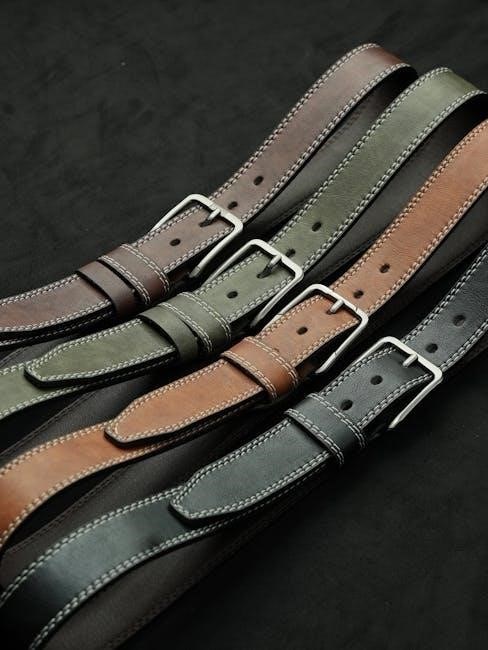
However, this is an approximation. Variations exist between brands, and individual body shapes play a role. If you typically wear a size 30, start with a belt size 32. It’s always better to err on the slightly larger side, as belts can be adjusted.
Consider the rise of your pants; high-waisted styles may require a larger belt size than low-rise options. Accurate measurement remains the most reliable method, but US clothing size can provide a useful initial estimate.
Using EU Clothing Sizes
Converting from EU clothing sizes to belt size requires a similar approach to US sizes, acknowledging that trouser waist measurements aren’t a direct match. EU sizes are often numerically lower than US sizes for the same waist circumference; Generally, add approximately 5-10 centimeters (2-4 inches) to your EU trouser size to estimate your belt size.
For example, if your trousers are size 38 (EU), a belt in the 85-90 cm range (approximately 33-35 inches) is a good starting point. Remember that brand consistency can vary, so this remains an estimation.
Pay attention to the cut of your trousers; a slim-fit style might require a snugger belt, while a looser fit allows for more flexibility. Always prioritize accurate measurement for the best fit, but EU sizing offers a helpful initial guide.
Measuring for a Belt: A Step-by-Step Guide
Achieving the perfect belt fit begins with accurate measurement. This guide details a straightforward process to determine your ideal belt size, ensuring both comfort and style. Begin by wearing the trousers you intend to pair with the belt, as this impacts the measurement point;
Locate your natural waistline, or where you typically wear your belt – usually around your navel. This serves as the reference point for a precise measurement. Ensure the measuring tool (tape measure or string) is snug, but not overly tight, around your waist.
Record the measurement in inches or centimeters, and remember to add a small allowance (around 2-4 inches or 5-10 cm) for comfort and to account for the belt buckle’s thickness. This ensures a secure, yet comfortable, fit.
Measuring with a Tape Measure
Utilizing a tape measure provides the most accurate belt size determination. Begin by standing comfortably and ensuring your trousers are on, mirroring how you’d typically wear a belt. Position the tape measure around your natural waistline, or where you intend to wear the belt – generally near your navel.
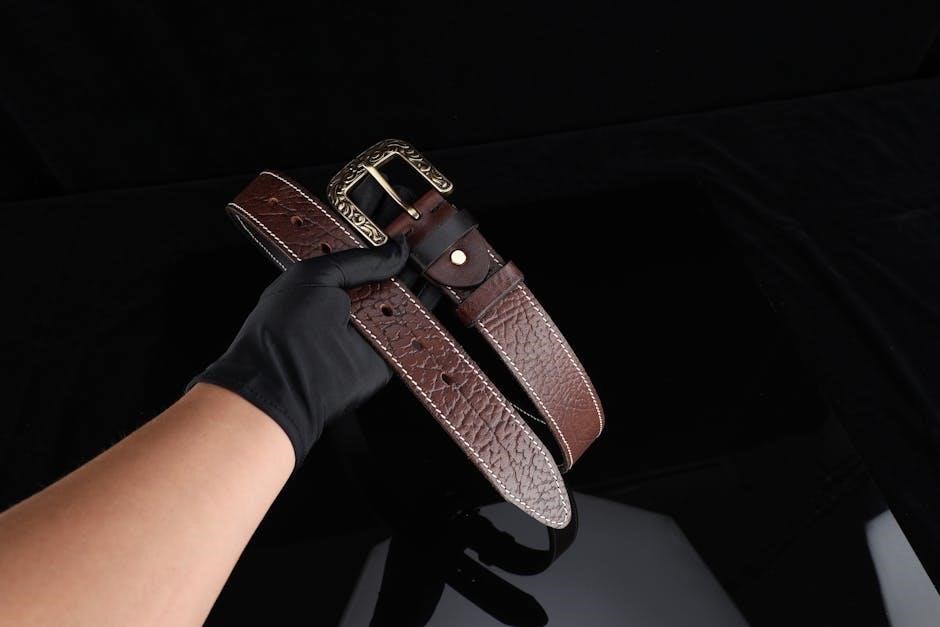
Maintain a snug, but not constricting, grip on the tape measure. Avoid pulling it too tightly, as this will result in an undersized measurement. Ensure the zero mark aligns with a point on your body, and read the measurement where the tape overlaps.
Record the measurement in inches or centimeters with precision. For optimal fit, add 2-4 inches (5-10 cm) to this measurement to accommodate the belt buckle and ensure comfortable wear. This adjusted figure represents your ideal belt size.
Measuring with String
If a tape measure isn’t readily available, string offers a viable alternative for determining your belt size. Begin by wrapping a length of string snugly around your natural waistline, or at the intended belt position – typically near your navel, mirroring how you’d wear your trousers.
Ensure the string is comfortably snug, avoiding excessive tightness that could distort the measurement. Mark the point where the string overlaps with a pen or marker. Carefully remove the string and lay it flat against a ruler or measuring tape.
Record the measurement in inches or centimeters with accuracy. As with a tape measure, add 2-4 inches (5-10 cm) to this measurement to account for the buckle and ensure a comfortable, secure fit. This final figure indicates your appropriate belt size.
Belt Width and its Impact on Size
Belt width significantly influences both aesthetics and fit; understanding this relationship is crucial for selecting the right size. Wider belts, typically 1.5 inches or more, often require a slightly larger size than narrower belts due to how they sit on the waist and distribute weight.
A wider belt can feel more secure, particularly with heavier trousers or workwear, but may necessitate going up a size to avoid constriction. Conversely, slimmer belts, around 1 inch wide, are often more versatile and may fit true to your measured waist size.
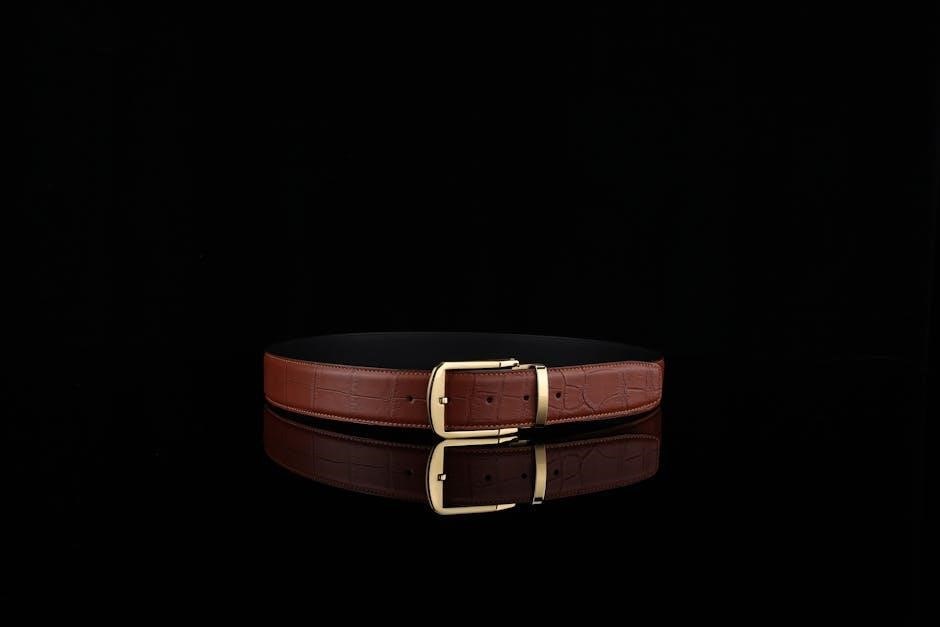
Consider the belt loops on your trousers; the belt width should complement their size. A too-wide belt won’t fit through narrow loops, while a too-narrow belt can appear disproportionate. Always factor width into your overall sizing decision.
Different Belt Styles and Sizing Considerations
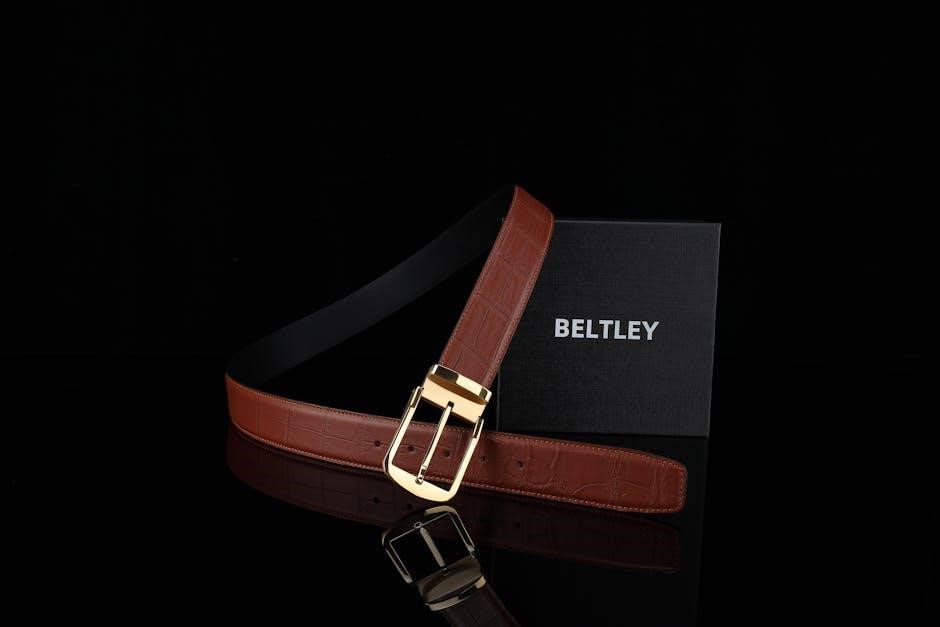
Belt style dramatically impacts sizing needs; tool belts and work belts, designed for functionality, often require a more precise fit, measured around the hips where they’ll be worn, rather than the natural waist. These belts frequently feature adjustable buckles for a secure hold during activity.
Fashion and dress belts, prioritizing aesthetics, can be more forgiving in terms of fit. However, a proper fit remains essential for a polished look. Generally, these belts are sized to your waist, but consider the rise of your trousers – high-waisted styles may require a slightly larger belt.
Always check the manufacturer’s sizing guide, as variations exist between brands and styles. Prioritize comfort and ensure the belt doesn’t feel too tight or loose.
Tool Belts & Work Belts
Accurate sizing is paramount for tool and work belts, directly impacting safety and efficiency. Unlike standard belts fitted at the waist, these are typically worn on the hips, demanding a precise measurement at that point. Use a tape measure or string to determine your hip circumference where the belt will sit.
Ensure the tape is snug, but not constricting, mirroring how the loaded belt will feel during work. Many work belts feature adjustable buckles and heavy-duty construction to accommodate tools and withstand rigorous use. Consider the weight of the tools you’ll be carrying when selecting a size; a slightly larger belt may be necessary for heavier loads.
Prioritize a secure fit to prevent slippage and maintain stability while working.
Fashion Belts & Dress Belts
Sizing for fashion and dress belts generally aligns with your waist measurement, though personal preference plays a significant role. These belts are often worn lower on the waist than tool belts, so measuring at your natural waistline is crucial. A snug, comfortable fit is key, allowing for ease of movement without feeling overly tight.
Consider the belt’s intended style; a looser fit might be desirable for certain fashion statements, while a more precise fit is preferred for defining the waist with dresses or tailored outfits. When converting clothing sizes, remember that belt sizes often differ, so referencing a specific belt size chart is recommended.
Pay attention to buckle style, as it can influence overall comfort and fit.
Understanding “One Size” Belts
“One size” belts, typically measuring around 120cm (47 inches), are designed to offer flexibility, accommodating a range of waist sizes. However, this doesn’t guarantee a perfect fit for everyone. These belts usually feature adjustable buckles or mechanisms, allowing for customization to your individual waistline.
Before purchasing a “one size” belt, carefully check the adjustable range to ensure it aligns with your measurements. Individuals with significantly smaller or larger waists may find these belts unsuitable. It’s crucial to understand that “one size” often caters to an average range, and a precise fit isn’t always guaranteed.
Consider the belt’s material and construction; some materials stretch more than others, impacting the overall fit.
Belt Size Adjustments and Extending Belt Life
Minor size discrepancies can often be addressed through simple adjustments. If a belt feels slightly too large, consider adding additional holes using a leather punch – ensuring proper spacing and alignment. For belts that are too small, buckle extenders can provide a temporary solution, adding extra length.
To maximize your belt’s lifespan, regular leather conditioning is essential. This prevents cracking and maintains suppleness. Avoid over-tightening the belt, as this can strain the leather and buckle. Store belts flat or hung to prevent warping.
Proper care and timely adjustments will ensure your belt remains a functional and stylish accessory for years to come, saving you from premature replacements.
Common Belt Sizing Mistakes to Avoid
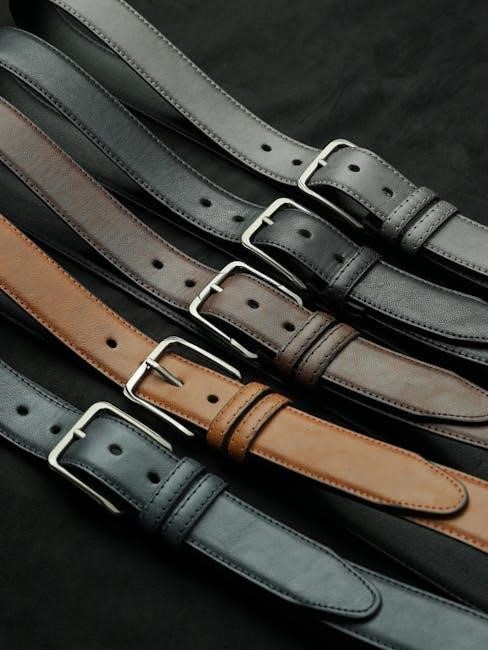
A frequent error is measuring over clothing, which adds unnecessary bulk and leads to an inaccurate size. Always measure directly against your skin or light undergarments for the most precise reading. Another mistake is assuming your trouser size directly translates to your belt size – these measurements differ significantly.
Ignoring waist position is also problematic; belts are typically worn at the natural waist or hips, impacting the required length. Failing to account for belt width can also cause issues, as wider belts require slightly larger sizes.
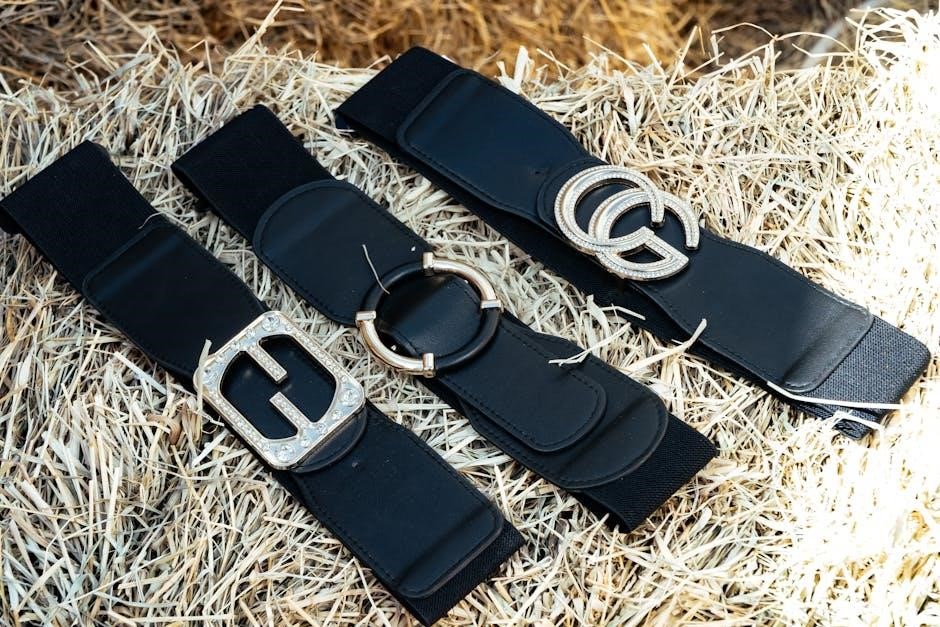
Finally, relying on generic “one size” belts without checking the length can lead to a poor fit. Careful measurement and understanding these common pitfalls will ensure a comfortable and secure belt experience.
Where to Find Accurate Belt Size Charts Online
Numerous retailers offer comprehensive belt size charts on their websites, providing valuable resources for finding your perfect fit. Look for charts that include both waist and inseam measurements, catering to diverse body types. Many brands, specializing in workwear or fashion belts, feature dedicated sizing guides tailored to their specific styles.
Websites dedicated to men’s or women’s fashion often compile generalized belt size charts, converting between US and EU sizing standards. Independent style blogs and forums can also provide helpful insights and user reviews regarding specific brand sizing.
Always cross-reference multiple charts to ensure accuracy, and prioritize those offering detailed instructions on how to measure correctly. Remember to check the retailer’s return policy in case the initial size isn’t quite right.
Leather Belt Care and Longevity
Proper leather belt care significantly extends its lifespan and maintains its appearance; regular conditioning is crucial, preventing cracking and preserving suppleness. Clean your belt periodically with a leather cleaner, removing dirt and grime without harsh chemicals. Avoid exposing leather to excessive moisture or direct sunlight, as these can cause damage.
When storing, hang your belts or lay them flat to prevent creases. Rotate your belts regularly to distribute wear evenly, avoiding concentrated stress on specific areas. Addressing minor scuffs promptly with a leather repair kit can prevent them from worsening.
Investing in quality leather and consistent care ensures a durable and stylish accessory for years to come, complementing your wardrobe and reflecting your attention to detail.